


40-400 Mesh Stainless Steel Sieve Selection for Powder Material Classification
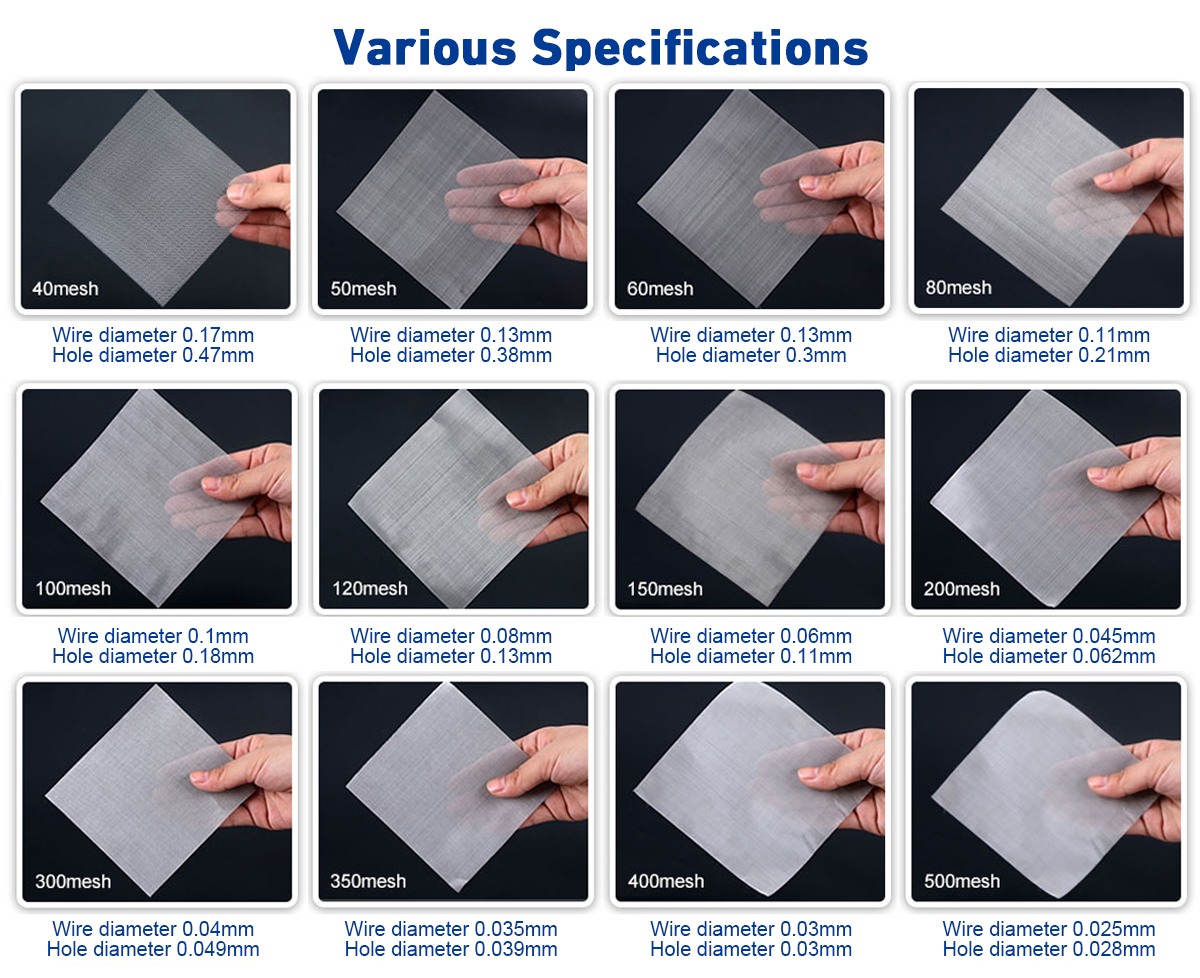
Mesh Count & Aperture Correlation of 40–400 Stainless Steel Sieve
Core aperture reference of mainstream mesh specifications:
- 40–60 mesh: Aperture 250–425μm, dedicated to coarse impurity removal and primary powder pre-sieving
- 80–150 mesh: Aperture 100–180μm, suitable for medium particle grading of food, mineral and general chemical powder
- 200–325 mesh: Aperture 38–75μm, standard mesh for lithium battery cathode/anode powder, pharmaceutical raw material fine screening
- 350–400 mesh: Aperture 30–38μm, ultra-fine classification for high-purity chemical additives, cosmetic powder and micro mineral powder
Choose Stainless Steel Grade Based On Powder Medium Corrosion
1.304 Stainless Steel Sieve (Cost-Effective General Grade)
Applicable powders: Grain flour, graphite, quartz sand, lithium iron phosphate coarse powder, food additives without acid/alkali additives.
2. 316 / 316L Stainless Steel Sieve (High Anti-Corrosion Food & Chemical Grade)
Applicable powders: Pharmaceutical API powder, marine mineral powder, salt-containing food powder, ternary lithium battery fine materials.
3. 904L Super Stainless Steel Sieve (Custom Corrosion-Resistant Option)
Select Weave Pattern According To Powder Viscosity & Anti-Clog Demand
- Plain Weave Stainless Steel Sieve (40–200 mesh)
Uniform wire intersection, flat screen surface, low cost and stable aperture. Best for dry, non-sticky powder such as grain powder, metal mineral coarse powder. Shortcoming: Fine powder below 200 mesh is prone to blockage under long-time continuous screening.
- Twill Weave Stainless Steel Sieve (200–400 mesh)
Cross wire stacking structure improves mesh structural tightness, reduces wire deformation under high-frequency vibration. It is the standard weave for lithium battery powder, medicine fine powder ultrasonic screening, greatly lowering mesh breakage risk during long-cycle production.
- Dutch Weave Sieve (200–400 mesh precision filtration grade)
Denser warp and weft wire layout, ultra-narrow aperture tolerance, higher separation accuracy. Suitable for strict particle size control scenarios like high-purity chemical powder and catalyst classification, widely used in petrochemical fine powder grading.
Industry-Specific 40-400 Mesh Sieve Matching Scheme
1.New Energy Lithium Battery Powder Screening
- Coarse pre-screening (remove large particle agglomerates): 40–60 mesh
- Medium grading of anode graphite powder: 100–200 mesh
- Fine separation of ternary & LFP cathode materials: 280–325 mesh
- Ultra-fine high-purity lithium powder classification: 350–400 mesh
Twill weave 316L stainless steel sieve is recommended, matching ultrasonic vibrating screen to solve static adhesion and mesh clogging of ultra-fine battery powder.
2.Food & Edible Powder Classification
- Wheat, corn grain powder impurity removal: 40–80 mesh
- Cocoa, matcha, milk powder fine grading: 100–200 mesh
- Food additive ultra-fine powder separation: 250–300 mesh
Food-grade 316 plain weave sieve is adopted, easy to disassemble and clean to avoid cross-contamination of food raw materials.
3.Pharmaceutical & Fine Chemical Powder
- Traditional Chinese medicine powder coarse screening: 60–120 mesh
- Pharmaceutical API fine particle grading: 200–400 mesh
For pharmaceutical production lines, DXR provides fully calibrated sieves with inspection certificates to meet factory quality audit standards.
4.Mineral & Metallurgical Powder
- Sand, ore coarse powder separation: 40–100 mesh
- Metal oxide ultra-fine mineral powder sorting: 200–325 mesh
Crimped mesh composite sieves can be customized for heavy-load mineral screening to boost tensile resistance.
Common Selection Mistakes & DXR Optimized Solutions
- Blindly choosing high mesh count without matching particle size
Mismatched ultra-fine mesh will cause serious clogging and low screening efficiency. Suggest testing small batches with gradient mesh samples before mass ordering.
- Using 304 mesh for corrosive alkaline powder
Short service life and rust contamination of finished powder; switch to 316L stainless steel sieve for long-term cost reduction.
- Ignoring weaving pattern for sticky ultra-fine powder
Plain weave 300–400 mesh easily accumulates static powder; twill or Dutch weave structures effectively improve powder penetration rate.
DXR Custom OEM & Quality Support for 40-400 Mesh Stainless Steel Sieves
Post time: Jun-24-2026