


Custom Perforated Metal Sheets for Grain Storage Ventilation: Complete Specification & Purchasing Guide
Founded in Anping wire mesh hometown in 1988, DXR Wire Cloth has supplied tailor-made perforated metal panels for global grain depots across Europe, Southeast Asia and South America over 3 decades. Perforated sheets act as core ventilation flooring and air duct parts inside grain silos for wheat, corn, rice and soybean storage, solving grain mildew, overheating and pest breeding caused by poor air circulation. Many grain warehouse purchasers pick wrong hole size or raw material and face frequent replacement cost. This practical guide sorts out material options, hole-type differences, core specs and real DXR overseas grain project experience to help buyers select cost-effective grain-specific perforated metal sheets efficiently.
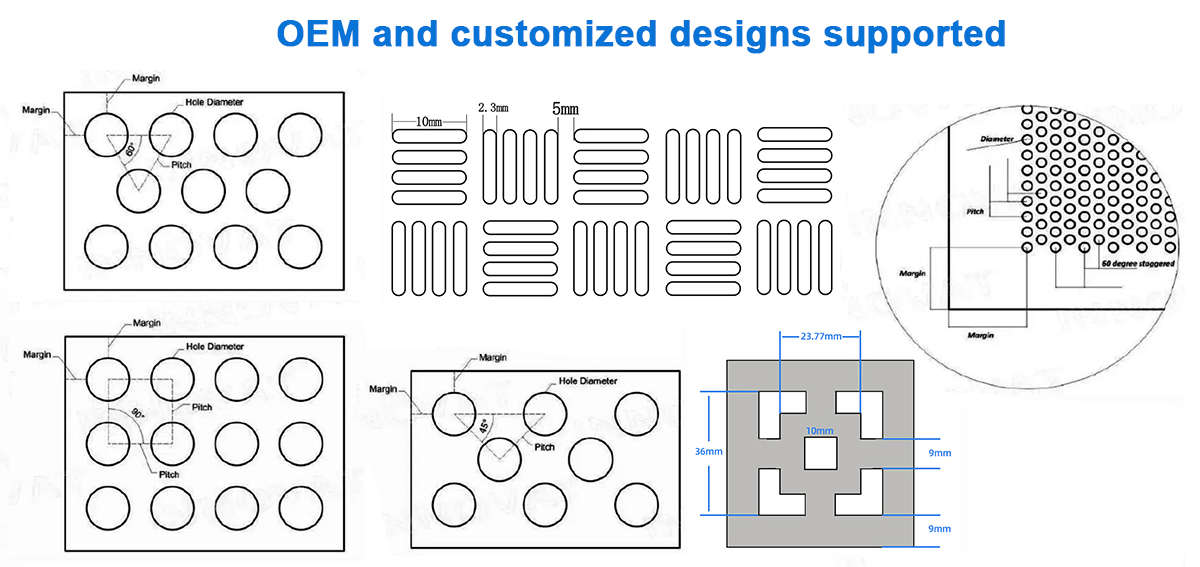
Main Raw Material Choices for Grain Storage Perforated Panels
Combining DXR’s 90% export data to over 50 countries and long-term grain depot after-sales feedback, we organize exclusive material comparison table below, covering common working environment inside granaries (high humidity, grain fermentation volatile gas):
| Material Grade | Basic Composition | Anti-Corrosion & Physical Feature | Best Suitable Grain Storage Scenario |
|---|---|---|---|
| Hot-dip Galvanized Carbon Steel | SPCC cold rolled base + full zinc coating | Low cost, resist normal damp air; not resistant to acid volatile from fermented grain | Medium/low humidity local granary, temporary grain storage warehouse |
| 304 Stainless Steel | 18%Cr+8%Ni alloy | Anti-rust against mild organic acid & long-term high moisture, food-safe | Large-scale commercial grain silo, coastal humid-region grain depot |
| 5052 Aluminum Alloy Sheet | Al-Mg alloy | Ultra-lightweight, oxidation-proof, easy onsite cutting modification | Small family grain barn, removable temporary ventilation frame |
DXR Engineer Tip: Tropical coastal grain warehouses with high rainfall and air humidity must abandon galvanized steel and choose 304 perforated panel to cut annual maintenance expense from rust damage.
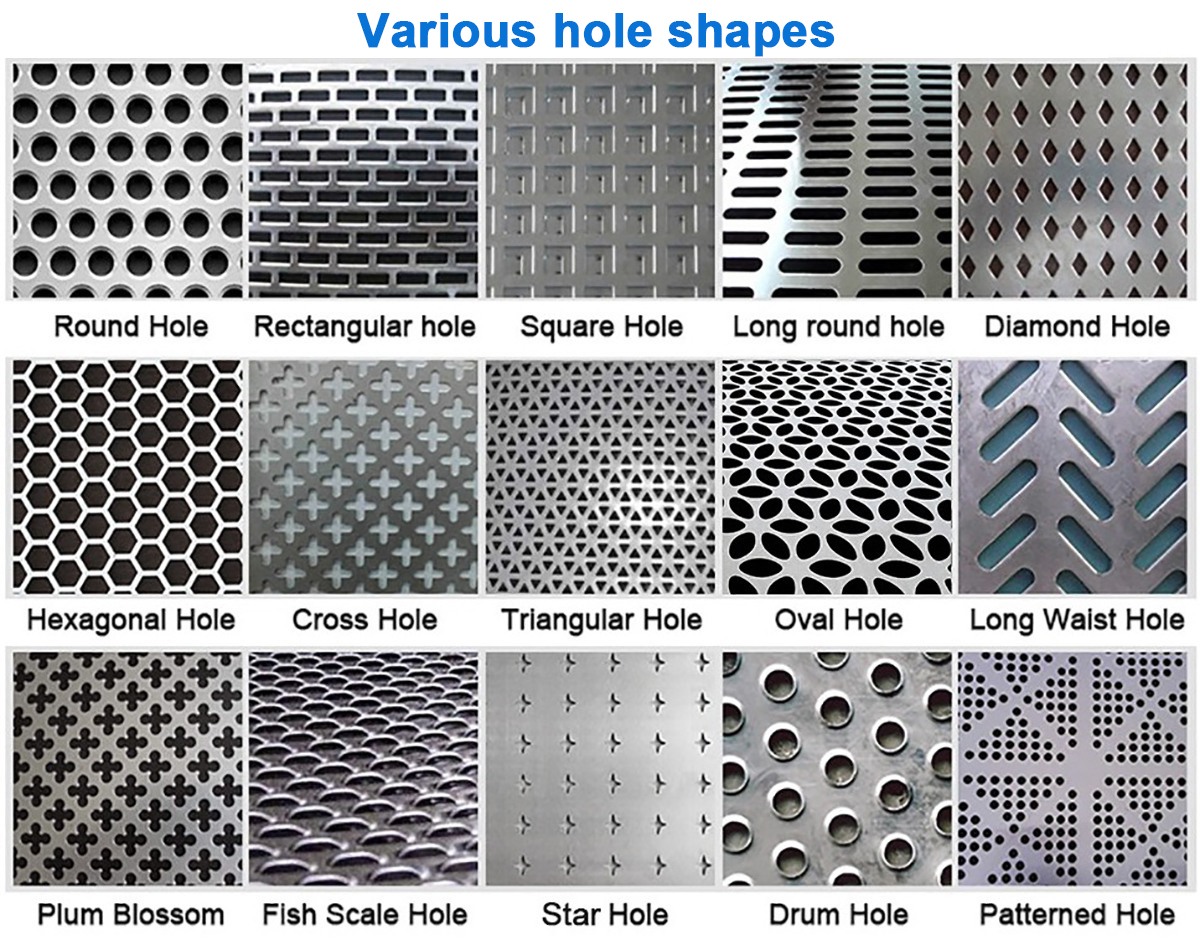
Four Popular Hole Patterns and Application Differences in Granary Ventilation
1. Round Hole Perforated Sheet
Most widely adopted type with uniform round apertures (3mm–8mm standard for grain use). Even stress distribution prevents sharp edge scratch on piled grains; ideal for whole-warehouse ground ventilation floor of corn and wheat silos, accounts for over 60% global grain depot usage of perforated products.
2. Fish Scale (Herringbone) Perforated Panel
Unique tilted opening design, core advantage: air circulates freely while completely blocking small grain leakage. Usually bent into U-shape ventilation trough (20mm folded edge, with internal reinforcing ribs), the mainstream choice for underground ventilation air duct inside large grain storage base.
3. Square Hole and Long Slot Perforated Plate
Square hole (4–10mm): higher open rate for fast air exhaust, for grain pre-drying workshop ventilation wall; long waist slot: enhance cross ventilation, applied on granary sidewall exhaust boards.
Key Technical Parameters for Grain-Specific Perforated Sheet (DXR Factory Standard Data)
All parameters summarized from DXR in-house production inspection standard for grain orders, original exclusive content:
Plate Thickness: Conventional grain ventilation panel uses 0.8mm–2.5mm; heavy-load floor (staff walking + full grain pressure) ≥1.5mm thickness to avoid bending deformation under long-term compression.
Open Rate: 22%–32% is optimal range for grain storage; below 20% leads to poor ventilation & grain mildew; above 35% causes grain leakage risk.
Processing Tolerance: CNC punching control hole tolerance within ±0.06mm to guarantee consistent air flow across entire silo floor.
Two Real Overseas Grain Warehouse Project Cases
Case 1: Galvanized Fish Scale Perforated Sheet for Thailand Rice Storage Base (2024 Export Project)
DXR finished 12,000 sqm U-type fish scale perforated ventilation trough for a Thailand state-owned rice depot in 2024. Previous supplier used round-hole carbon steel plate with constant rice leakage and rust after 10-month service. After DXR customized tilted fish scale design, zero grain leakage occurred and the product passed local tropical damp salt spray test for 1200 hours without rust, helping client cut 58% annual spare part replacement cost.
Case 2: 304 Stainless Round Hole Perforated Panel for Romania Corn Silo
In early 2025, DXR supplied 8,600 sqm food-grade 304 perforated sheets for a large corn storage park in Romania, used as ground ventilation floor for 12 high-capacity silos. The 304 material fits local cold-wet continental climate and reaches 8+ years expected service life without corrosion.
Practical Buying Checklist to Avoid Poor-Quality Grain Perforated Panels
Summarized by DXR’s technical sales team with over 30-year industrial experience:
1. Confirm granary environment (humidity, coastal/inland) first to lock suitable raw material grade before quotation.
2. Specify target stored grain type (rice/corn/wheat) to fix accurate hole diameter and open rate.
3. Require supplier to provide material composition test report for stainless/galvanized items.
4. For underground air duct, select fish scale perforated sheet instead of regular round hole panel.
5. Large-size whole-floor customization: DXR supports pre-bending & rib reinforcement processing in factory to reduce onsite installation cost.
6. Food-grade grain warehouse needs surface polishing for 304 sheet to meet international food sanitation standard.
Right specification of perforated metal sheet directly decides long-term grain storage safety and warehouse operation cost. As an ISO9001 certified high-tech perforated mesh manufacturer with DXR trademark registered across 7 global countries, we provide free custom technical drawing and sample service for worldwide grain depot contractors and food storage factory buyers.
Post time: Jun-05-2026