


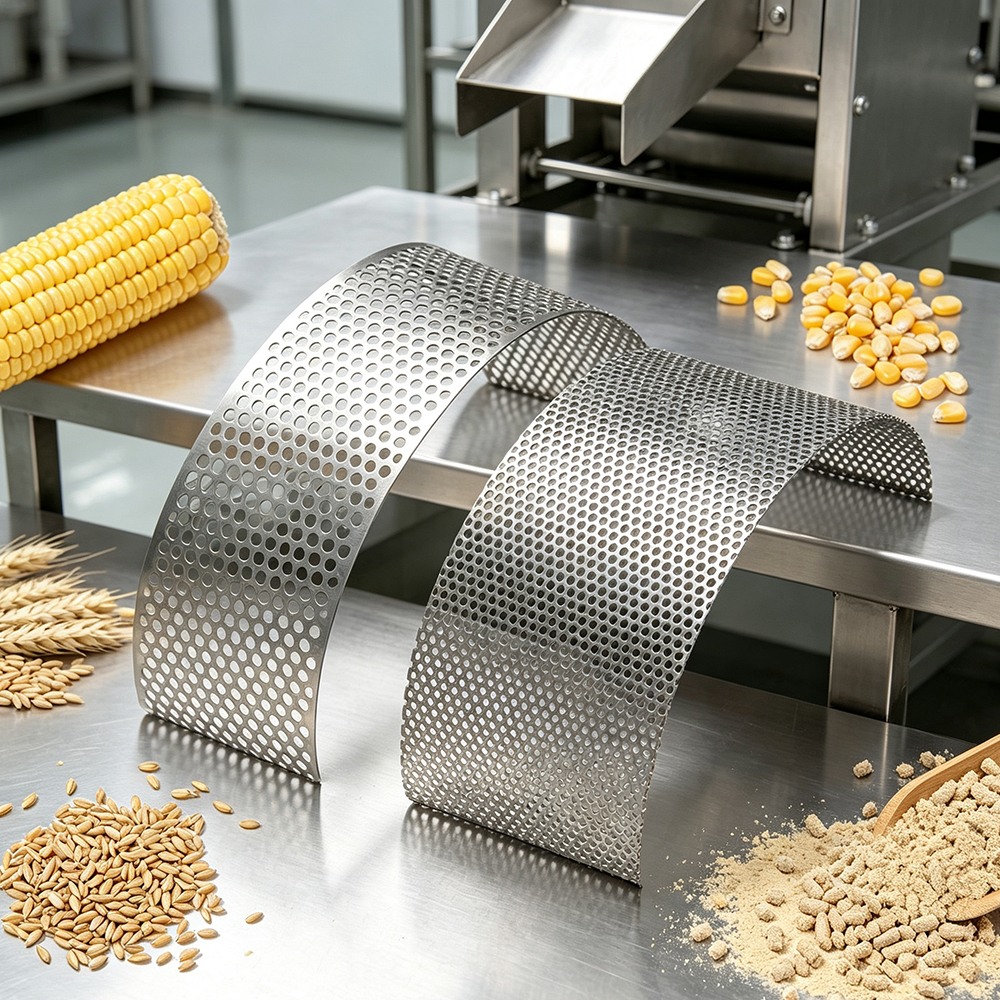
For feed mill operators, the hammer mill screen is more than just a piece of perforated metal; it is the gatekeeper of particle size and the primary driver of energy consumption. Selecting the wrong aperture can lead to poor pellet quality, increased fineness, and unnecessary power costs.
Understanding Aperture Size
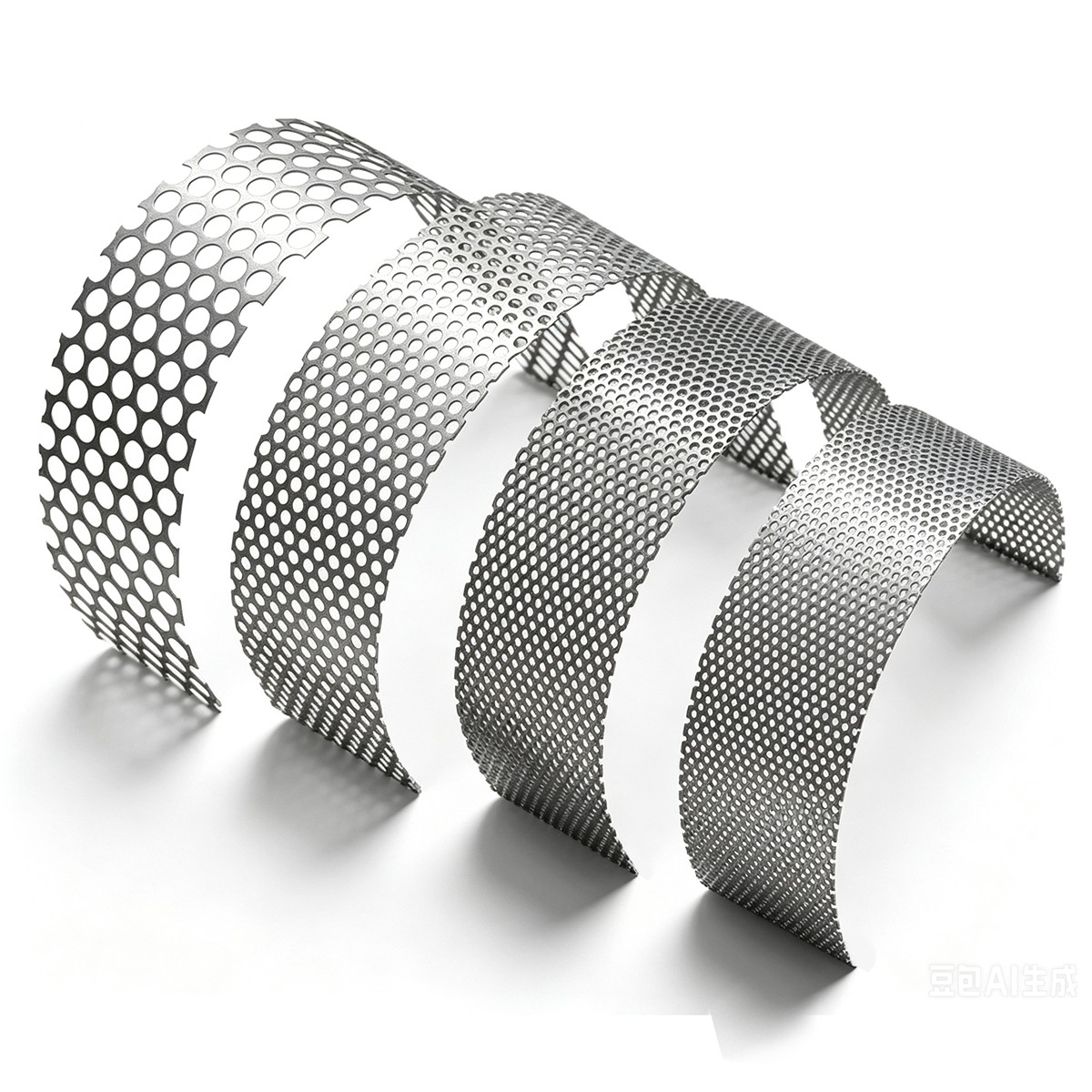
The aperture (hole diameter) determines the final size of the ground material. In poultry feed production, a smaller aperture (0.8mm – 2.0mm) is required to ensure chicks can digest the nutrients efficiently. Conversely, ruminant feeds for cattle often utilize larger apertures (4.0mm – 8.0mm) to promote rumen development.
Material Matters: 304 vs. 316L Stainless Steel
While carbon steel is cheaper, it fails quickly in corrosive feed environments. We recommend 304 Stainless Steel for standard corn and soybean grinding due to its excellent balance of cost and corrosion resistance. However, for aquaculture feed or facilities using high-moisture ingredients, 316L Stainless Steel offers superior protection against chlorides and acids, significantly extending service life.
Matching Screen to Raw Material
Fibrous materials like alfalfa require different perforation patterns compared to brittle corn. At DXR, we customize not only the aperture but also the hole geometry—offering round, slotted, or ConiPerf patterns—to optimize throughput and reduce the “bounce” effect inside the grinding chamber.
If you are unsure about your current setup, check our main product page for our Stainless Steel Hammer Mill Screen specifications or contact our engineering team with your mill model for a free consultation.
Post time: Jul-22-2026