


Modern industrial filtration systems require more than basic particle separation. Industries such as chemical processing, oil and gas, food production, pharmaceuticals, and new energy manufacturing need filtration materials that can provide consistent performance under demanding operating conditions.
Precision stainless steel wire mesh has become a reliable solution for advanced filtration applications due to its accurate opening control, excellent mechanical strength, corrosion resistance, and long service life. By selecting the right material grade, mesh size, and weaving structure, manufacturers can achieve efficient filtration while maintaining stable flow performance.
What Is Precision Stainless Steel Wire Mesh?
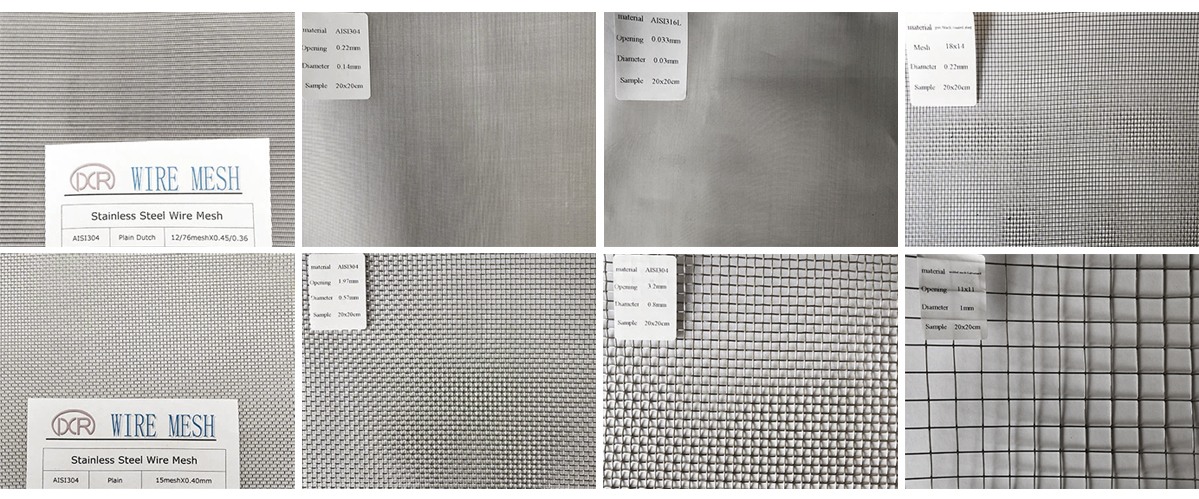
Precision stainless steel wire mesh is a woven filtration material manufactured from stainless steel wires with controlled wire diameter and mesh openings.
Unlike ordinary screening materials, precision wire mesh focuses on maintaining:
- Accurate filtration ratings
- Uniform mesh openings
- Stable structural strength
- Reliable performance during continuous operation
Common stainless steel materials include 304, 304L, 316, and 316L. Among them, 316L stainless steel wire mesh is often selected for applications requiring enhanced corrosion resistance and chemical stability.
Key Features That Make Stainless Steel Wire Mesh Suitable for Industrial Filtration
1. Accurate Filtration Performance
The filtration efficiency of wire mesh mainly depends on mesh count, wire diameter, and opening size.
A precisely manufactured mesh structure helps control particle separation while maintaining suitable liquid or gas flow rates.
For industrial users, choosing the correct opening size is important because:
- Smaller openings improve filtration accuracy
- Larger openings provide higher flow capacity
- Proper balance improves overall system efficiency
2. Excellent Corrosion Resistance
Industrial filtration environments often involve moisture, chemicals, high temperatures, or aggressive media.
Stainless steel wire mesh provides:
- Resistance to oxidation
- Good chemical stability
- Long-term durability in harsh environments
304 stainless steel is widely used for general filtration applications, while 316 and 316L stainless steel are preferred in chemical processing, marine, pharmaceutical, and food-related industries.
3. Strong Mechanical Stability
During filtration processes, filter materials may experience pressure changes, vibration, and repeated cleaning cycles.
Precision stainless steel wire mesh offers:
- High tensile strength
- Good dimensional stability
- Resistance to deformation
This makes it suitable for reusable filtration systems where durability is important.
Applications of Precision Stainless Steel Wire Mesh in Filtration Systems
Oil and Hydraulic Filtration
In hydraulic systems and industrial equipment, filtration materials must remove contaminants while allowing stable fluid flow.
Stainless steel wire mesh is commonly used for:
- Hydraulic oil filters
- Fuel filtration systems
- Lubrication filtration
Its strength and cleanability make it suitable for repeated use.
Chemical Processing Filtration
Chemical industries require filtration materials that can withstand challenging environments.
Precision stainless steel mesh can be used for:
- Liquid separation
- Catalyst recovery
- Chemical media filtration
316L stainless steel is frequently selected because of its improved corrosion resistance.
Food and Pharmaceutical Filtration
Industries with strict hygiene requirements need filtration materials that are easy to clean and maintain.
Stainless steel filter mesh supports applications including:
- Food ingredient filtration
- Beverage processing
- Pharmaceutical liquid filtration
The smooth surface and corrosion-resistant properties help meet demanding production requirements.
Battery Material Screening and Filtration
With the rapid development of lithium battery manufacturing, precise screening and separation have become increasingly important.
Stainless steel wire mesh can be applied in:
- Cathode material screening
- Anode powder classification
- Battery raw material separation
Accurate mesh openings help improve material consistency during production.
How to Choose the Right Stainless Steel Wire Mesh for Filtration
Selecting the correct wire mesh depends on several factors:
Material Grade
Consider:
- Operating environment
- Chemical exposure
- Temperature requirements
304 stainless steel is suitable for general applications, while 316/316L provides better corrosion resistance.
Mesh Count and Opening Size
Mesh selection should be based on:
- Target particle size
- Required filtration accuracy
- Processing speed
Higher mesh counts provide finer filtration, while lower mesh counts allow greater flow capacity.
Weaving Type
Different weaving methods provide different performance characteristics.
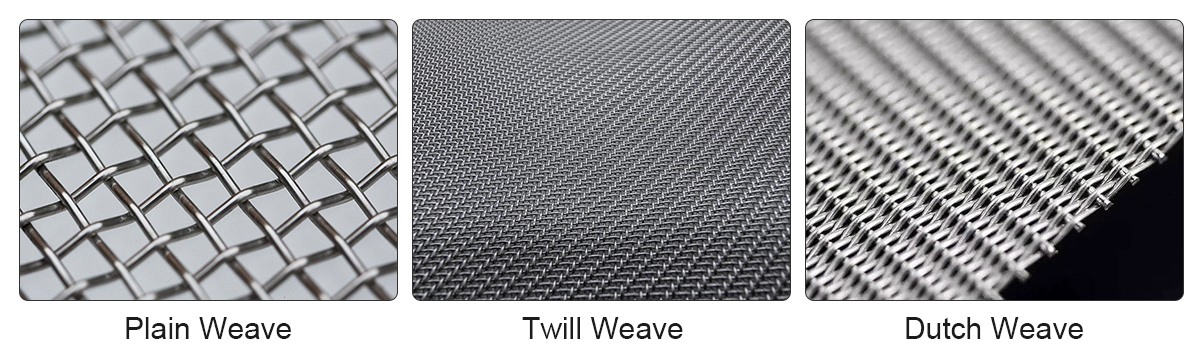
Common options include:
- Plain weave for general filtration
- Twill weave for stronger structures
- Dutch weave for high-pressure and fine filtration applications
Why Customized Wire Mesh Solutions Are Important
Industrial filtration systems often have unique requirements. Standard mesh products may not always provide the best performance.
Customized stainless steel wire mesh solutions allow manufacturers to adjust:
- Mesh count
- Wire diameter
- Material grade
- Width and length
- Filter processing methods
This helps customers achieve better filtration efficiency and longer service life.
DXR Stainless Steel Wire Mesh Manufacturing Capability
DXR Wire Mesh has specialized in wire mesh manufacturing since 1988, providing customized stainless steel wire mesh solutions for global industrial applications.
Our manufacturing capabilities include:
- Stainless steel wire mesh production
- Precision woven wire cloth
- Filter mesh processing
- Customized specifications according to customer requirements
Materials include 304, 304L, 316, and 316L stainless steel. Each batch can be inspected through professional testing equipment to ensure stable quality and consistent performance.
Conclusion
Precision stainless steel wire mesh plays an important role in modern industrial filtration systems. Its combination of accurate filtration control, corrosion resistance, strength, and customization capability makes it suitable for demanding applications across multiple industries.
For companies looking for reliable filtration materials, selecting the right stainless steel grade, mesh opening, and weaving structure is essential to achieving efficient and long-lasting filtration performance.
Post time: Aug-26-2026